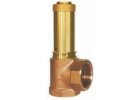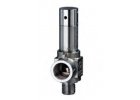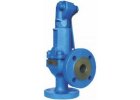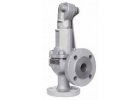
Safety valves for oil
Oil as a pressure medium in practice
Oil-based fluids are widely used as the medium for transmitting pressure in many sectors. Hydraulic systems in agriculture, construction and industry rely on the pressure of hydraulic oil to drive machines and mechanisms. These systems often work at very high pressures (tens to hundreds of bar) and require precise pressure control. Lubrication circuits and gearboxes use oil for the continuous lubrication of bearings and gears – in industrial gearboxes, for example, oil is circulated under a certain pressure to ensure all parts are lubricated. Internal combustion engines (petrol and diesel alike) contain an oil pump that creates oil pressure to lubricate the engine; here too the oil is pushed at a few bar and excess pressure is returned to the sump. In all these applications oil is the key medium for correct operation, and at the same time it must be ensured that the oil pressure does not exceed a safe limit.
The importance of safety valves in oil systems
Pressurised oil circuits face the danger of overpressure – when pump control fails, a pipe becomes blocked, or the medium heats and expands, for example. A safety valve is the safety element that protects the whole system from the consequences of excessive pressure. On reaching the set pressure the valve opens automatically and releases some of the medium, thereby stabilising and limiting the maximum pressure in the system. That prevents damage to equipment – without a safety valve, overpressure could burst pipes or hoses, release hot oil and endanger operators or nearby equipment. Safety valves for oil thus perform a protective function during unforeseen overloads and ensure safe operation. In many systems (pressure vessels, boilers and the like) safety valves are even a legal requirement and the last line of protection. A correctly working safety valve gives you the certainty that your oil system will stay within a safe pressure range in all circumstances.
(For the complete range of all types of safety valve, visit the main safety valves category, where you will find versions for various pressures and media.)
#ShowMore#
Specific features of valves intended for oil
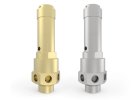
Materials and construction: Safety valves for oil are made of durable materials that cope with an oil medium. Most often that means brass, stainless steel or bronze. Brass valves are popular for neutral, non-aggressive media (mineral oils, for instance) and ordinary operating temperatures. Stainless steel (or bronze) is used for more demanding conditions – more corrosive oils, additives or higher temperatures – where greater chemical and mechanical resistance is required. In construction these valves are generally threaded (with a screw connection into the system) for easy installation directly on pipework or manifold blocks. A compact design is typical, so that the valve fits even into the confined spaces of machines and equipment. The internal flow passages and valve seat are designed so that the valve works reliably even with a viscous medium (thicker liquid) – meaning generously sized openings and a strong spring able to overcome the resistance of thick oil when opening. Hydraulic safety valves also use the simplest possible direct-spring design, which is more resistant to contamination in the oil (coarse dirt could prevent opening on more complex, pilot-operated valves).
Temperature and pressure resistance: Oil systems can work across a wide range of pressures and temperatures. Safety valves for oil must therefore be built to withstand the maximum working pressure of the application safely. In hydraulics that can mean very high values (commonly 100–300 bar, special valves even over 500 bar), while in engine or gearbox lubrication circuits it is more a matter of single-digit bar. Every valve has a defined set opening pressure (5 bar, 10 bar, 160 bar and so on) at which it begins to release the medium. It is also important that the valve handles the expected oil flow when open – manufacturers therefore state the valve's capacity (flow rate) as a function of pressure. As for temperatures, oil fluids usually work from roughly room temperature to about 60–80 °C, but in some systems (hydraulics in a hot environment, oil in an engine) the oil can reach higher temperatures. Both the valve material and the seal must match that. The most commonly used sealing material for oil is NBR (nitrile rubber) – it resists mineral oils well and commonly tolerates temperatures around 80 °C long term. For higher temperatures or special fluids, FKM (fluoroelastomer, sold as Viton) is used, withstanding temperatures up to around 150 °C and more resistant to chemically aggressive substances. You may also encounter other seal designations such as EPDM (which, however, is not suitable for oils, rather for water and steam) or PTFE (a PTFE seat on some valves, resistant thermally and chemically, but used mainly for gases). It is important to choose a valve with a seal compatible with your medium and temperature – the manufacturer usually gives the medium temperature range precisely according to the seal used. One of the parameters of Bosch Rexroth hydraulic safety valves, for instance, specifies an oil temperature from -10 °C to +60 °C and a kinematic oil viscosity between 12 and 230 mm²/s (cSt) for reliable valve function. We know from this that very thick oils (outside the stated viscosity range) or extreme temperatures require a special solution; otherwise deviations in valve function may occur.
Certification and testing: Safety valves are safety devices and are therefore subject to strict standards. Within the EU they must comply with the PED 2014/68/EU Pressure Equipment Directive – hence the CE marking. Quality safety valves for oil are supplied with the relevant certificates of setting and function testing. You will often encounter the TÜV certificate (Technischer Überwachungsverein) – an independent test house that verifies the valve meets safety requirements and opens at the stated pressure. Such a valve also carries a plate with the certification number (TUV-SV.1048, for example). Every safety valve must hold the appropriate certification for its service; only then can you be sure it meets the standards and may legally be used in a pressure system (Safety valves certified to TUV-SV.1048). Buying from a specialised supplier (such as ourselves) gives you the certainty that all the valves offered are already certified, set to the required pressure and ready to install. In construction, oil safety valves may be either direct-acting (direct spring, suitable for most ordinary applications) or pilot-operated (two-stage, using a small pilot seat to control the main valve – these are used more at very high flows or pressures). For most small and medium oil systems, a compact direct-acting spring valve suffices, with the added advantage of being less sensitive to any contamination in the oil.
(It is worth noting that reputable manufacturers such as HEROSE specialise in safety valves – our range includes a number of their products for oil and other media.)
Recommendations for choosing an oil safety valve
Several key parameters must be considered when choosing a safety valve for an oil system:
-
What medium the valve is intended for: Always make sure the valve is suitable for oil fluids. Every safety valve should state in its description which media it is approved for (How to choose the right safety valve?). Some types are universal for liquids and gases; others are built, for instance, only for air or water. For oil we choose a valve intended for hydraulic or lubricating oils – it will have the appropriate material and seal.
-
Pressure range and setting: Choose a valve with an opening pressure matching the value required in your system. The set opening pressure (the relief pressure) should equal the maximum allowable pressure you are still willing to permit in the system. In hydraulics the safety valve is typically set somewhat above the pump's working pressure (so that it does not blow off in normal operation) yet below the maximum limit of the components. If the pump delivers 150 bar, for example, the safety valve may be set to 160 bar. In an engine lubrication circuit, where the normal pressure is ~4 bar, the safety valve will be set to 6–8 bar for a cold start. Check the valve's maximum design pressure too, so that it covers the highest possible pressure in the system with sufficient margin.
-
Oil viscosity and temperature: These properties of the medium relate closely to the valve's function. Thicker (viscous) oil offers more resistance to flow – if you use very viscous oil (cold gear oil, or special high-viscosity-grade oils), choose a valve with a sufficiently large flow opening and capacity. At low temperatures, when the oil thickens, the valve may open only at a slightly higher pressure than set (because of the increased resistance in the system). To keep the opening pressure accurate even in frost, it is good to size both the valve and the pipework somewhat larger – pressure losses are minimised and the valve does not respond late. Conversely, with thinner (low-viscosity) oils or higher temperatures the flow is easier and the valve responds sensitively. As for temperature, make sure the valve seal matches the maximum oil temperature – above 100 °C, for instance, a Viton (FKM) seal is already necessary; standard NBR would harden quickly and lose elasticity. The thermal expansion of materials can also affect the valve setting, but on quality valves the manufacturer compensates for this in the design.
-
Oil cleanliness: Contaminated oil (containing dirt, deposits or sludge) can adversely affect the tightness and function of a safety valve. Fine particles can settle on the valve seat and cause it to seep (the valve then constantly releases a little pressure when it should not). In the worse case, contamination can prevent the valve opening when needed. It is therefore essential to keep the oil charge as clean as possible – changing filters and oil regularly as recommended. If you know your system suffers from contamination or you cannot guarantee perfectly clean oil, consider a direct-acting valve with a robust spring (a simpler design tolerates admixtures better, whereas pilot-operated valves with narrow passages can clog). In extreme cases a second safety valve set slightly higher can be added to the circuit as a back-up should the primary valve fail through contamination – though that is used more on critical equipment.
-
Size and connection: Check the thread or connection size of the valve so that it fits your system (typically G1/4", 3/8", 1/2" and so on on smaller valves; larger hydraulic valves may be cartridge types for a block or have SAE connections). The physical size of the valve should match the flow – generally a larger valve = higher flow. Do not underestimate the mounting orientation either – a safety valve is usually mounted vertically (so that the spring sits square and gravity does not affect it) unless the maker states otherwise.
-
Certification and manufacturer quality: Buy only valves from proven makers who supply certified products. Cheap unbranded valves without certificates may have inaccurate opening pressures or poor materials. Verify that the valve has CE marking and, where relevant, a TÜV certificate, particularly for industrial use or pressure vessels. It also matters that the valve allows the setting to be sealed (some valves have a locknut or a hole for a lead seal) – this is required so that nobody changes the pressure setting improperly after certification.
Finally, choosing the right safety valve can be demanding – you have to reconcile the requirements of pressure, flow, medium and ambient conditions. Do not hesitate to use our advice centre, where the article How to choose the right safety valve describes the selection procedure and further tips in detail. Alternatively, turn to our technical department; we will gladly advise you on the ideal valve tailored to your equipment.
Advantages and limits of safety valves for oil
Advantages: Safety valves intended for oil provide the necessary protection and peace of mind when operating pressure equipment. Among the main advantages is automatic function – the valve works entirely on its own, needs no control and acts precisely at the moment the pressure exceeds the safe limit. It thereby protects expensive components (pumps, pipework, seals, vessels) from damage and prevents accidents. Modern oil safety valves excel in reliability and fast response – they are designed to open the instant the set pressure is reached and release the required quantity of medium quickly enough. Another advantage is the option of precise pressure setting (on adjustable valves) or a fixed factory value – the user can thus choose the system's protective threshold exactly. The valves are generally small and compact, so they can easily be fitted retrospectively into existing circuits. Quality products are made of durable materials and last many years in service with minimal maintenance. The presence of a safety valve also often means legal safety requirements are met – equipment fitted with a certified safety valve may be operated in compliance with the regulations. Not least, using a correctly functioning safety valve increases the safety of operators and the surroundings – reducing the risk of injury from high-pressure oil or the knock-on effects of overpressure.
Limits: Despite their undisputed benefits, safety valves for oil have certain limits to be reckoned with. Above all they must be correctly sized and set – if a valve with too small a capacity were chosen, it might not release the pressure quickly enough and the system pressure would still rise above the safety limit. Conversely, too large a valve may be harder to adjust for low pressures and chattering can occur at small overpressures. Another limit is that a safety valve is not a control element for normal operation – it should not release medium continuously; if it does, that means the system is set up wrongly (the pump delivers a higher pressure than needed, for instance), wasting energy and wearing the valve. Ideally the valve should merely stand guard and act exceptionally. Given the valve's mechanical nature, maintenance must be allowed for: it is advisable to check its function and cleanliness occasionally. Deposits from the oil (carbonisation caused by high temperature, for example) can affect tightness over time – the valve may start to leak and the seating faces will need cleaning or refurbishing. Some valves allow a periodic test by lifting the valve disc (a manual blow-off test), which is an advantage but also carries the risk of upsetting the setting through improper handling. Oil contamination remains one of the main risks: although a valve can resist even coarser dirt thanks to robust construction (direct-acting types especially), larger particles can prevent the valve closing fully so that it seeps slightly, reducing system pressure below the optimum. On pilot-operated valves, contamination can block the pilot line so that the valve does not open at all when needed – this can be countered by using filters and by preferring simple valves in contaminated systems. A further potential limit lies in the temperature sensitivity of materials: in extreme frost, for example, a rubber seal can harden so that the valve no longer seals or opens correctly. Special versions must be chosen for such conditions (fluorosilicone seals for frost, for instance). In conclusion, safety valves for oil are highly reliable components – but only when correctly chosen, installed and maintained.
Internal links: We offer a wide range of safety valves for various applications. Besides oil valves you will also find specialised safety valves for water (for heating and water systems) or safety valves for steam (suitable for boilers and steam lines at high temperature). Do also look into the main safety valves category, where you will find every design – from small brass valves to large industrial safety valves. We believe that with the help of this guide and our range you will choose the right safety valve for your oil system, one that ensures its safe, trouble-free operation for many years.
-
 Safety valves 06C02; standard for compressed air
-
Relief valves 6217; full lift for compressed air
-
Safety valves 6370; for water, oil and diesel
-
Relief valves 6380-95; for saturated steam and nitrogen
-
Relief valves 6383-6012; in stainless steel with thread
-
Relief valves 6121; flanged cast iron
-
Safety valves 6127; flanged stainless steel
.jpg)